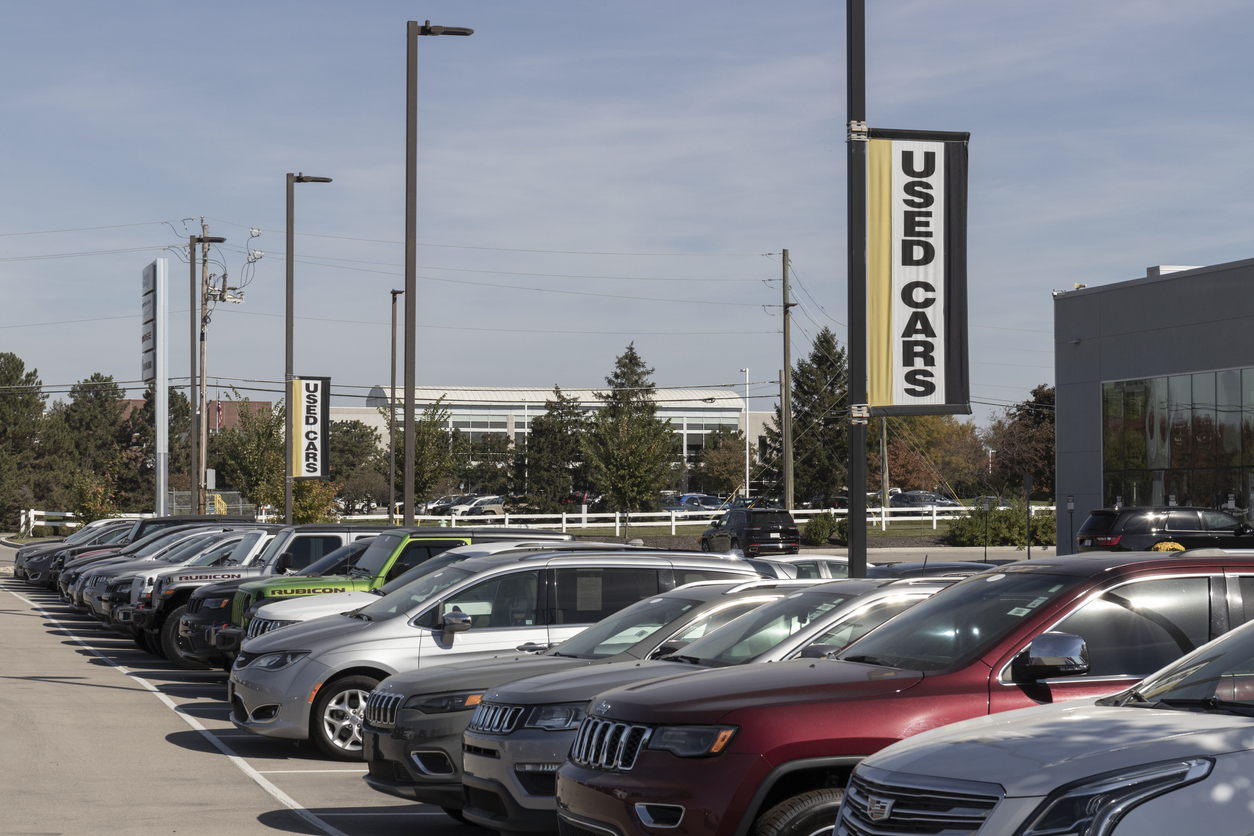
ISEECARS FINDS $20,000 REACHES ONLY 11.4% OF THREE-YEAR-OLD USED CARS
Eleven-point-four percent is what remains of a once-broad slice of the used-car market. An iSeeCars.com study of more than 11.4 million used-vehicle sales found that $20,000 now reaches only 11.4% of three-year-old used cars, compared with 49.4% in 2019.
To recover roughly the same market selection that budget provided among three-year-old vehicles in 2019, buyers now have to consider vehicles about seven years old. For someone returning to the market after keeping a car for several years, the practical change is stark: the same nominal budget can require accepting four additional years of age, along with greater uncertainty over wear, condition and maintenance history.
The budget has become an age tradeoff
The average price of a three-year-old used car increased 38.2%, or by more than $9,000. That rise does more than reduce the number of available listings. It changes the engineering and ownership questions attached to a purchase.
A three-year-old vehicle and a seven-year-old vehicle may share basic architecture, but they occupy different points in their service lives. Age can mean more exposure to heat cycles, road salt, ultraviolet light, vibration and previous repairs. Mileage matters, but it is not a complete condition metric: two vehicles with the same odometer reading can have very different maintenance records, duty cycles and operating environments.
That makes purchase price only one part of the comparison. As buyers move toward older inventory, records for scheduled service and repairs become more consequential. So do the condition of wear items and age-sensitive components. The study does not establish that seven-year-old cars are inherently unreliable; it shows that the $20,000 buyer is increasingly being pushed into a category where vehicle-specific inspection and lifecycle-cost uncertainty carry more weight.
Affordable models recorded large increases
The pressure was not confined to premium vehicles. According to the study, the average three-year-old Hyundai Elantra rose from $12,295 to $19,178, a 56% increase. The Kia Sportage climbed 50.5%, from $16,312 to $24,543, while the Toyota Camry increased 49.9%, from $16,567 to $24,829.
Those changes matter because economical sedans and mainstream utility vehicles often serve as fallback choices when other vehicles become unaffordable. iSeeCars attributed part of the increase to buyers shifting toward economical models as prices rose across the broader market. Greater demand for the nominally affordable alternatives can tighten their supply and lift their prices in turn.
The pattern also extended to limited-production luxury models, although for different buyers and at far higher price points. The average used Porsche 911 reportedly rose 74% to more than $230,000, and the Mercedes-Benz G-Class rose 72.8% to more than $172,000. iSeeCars executive analyst Karl Brauer linked those increases to constrained production and demand from buyers willing to pay more. Those examples do not describe the $20,000 market, but they illustrate how limited supply can amplify pricing when demand remains strong.
Longer service life helps, but it is not a blanket guarantee
Improved vehicle longevity can partly offset the move toward older cars. A well-maintained vehicle with 100,000 miles may still have substantial useful service ahead. But that proposition cannot be generalized across every brand, model, climate, powertrain or maintenance history, and it does not mean each 100,000-mile car has a predictable fraction of its life remaining.
Brauer cited his own 2002 BMW 330Ci Convertible, purchased with 54,000 miles for less than $10,000, and a similar model he sold while it was running smoothly at 217,000 miles. That is a useful illustration of possible longevity, not fleet-wide proof. Individual outcomes depend heavily on design, use, care and prior repairs.
Broader price measures also require careful comparison. The Bureau of Labor Statistics used-car inflation index covers vehicles from two through seven years old, while the iSeeCars headline result isolates three-year-old cars and asks how much inventory falls below a fixed dollar threshold. The two measures address related but different questions.
Even a softer monthly market does not restore the purchasing power lost since 2019. The latest BLS consumer-price release showed used-car and truck prices rising 0.4% in August 2026 but falling 2.3% over 12 months. Yet iSeeCars’ comparison shows that a fixed $20,000 ceiling still reaches a much smaller share of late-model inventory than it once did.
For buyers holding that ceiling, the decisive constraint is no longer simply which three-year-old car to choose. It is whether to increase the budget or move four years deeper into a vehicle’s service life and accept that maintenance history, condition and remaining useful life now carry more of the decision.
By Thomas Caldwell — AMI’s senior editor for mechanical and mobility engineering, covering vehicle electronics, systems integration, electrification, chassis systems, propulsion, and safety policy.
2026-09-15T09:49:46Z