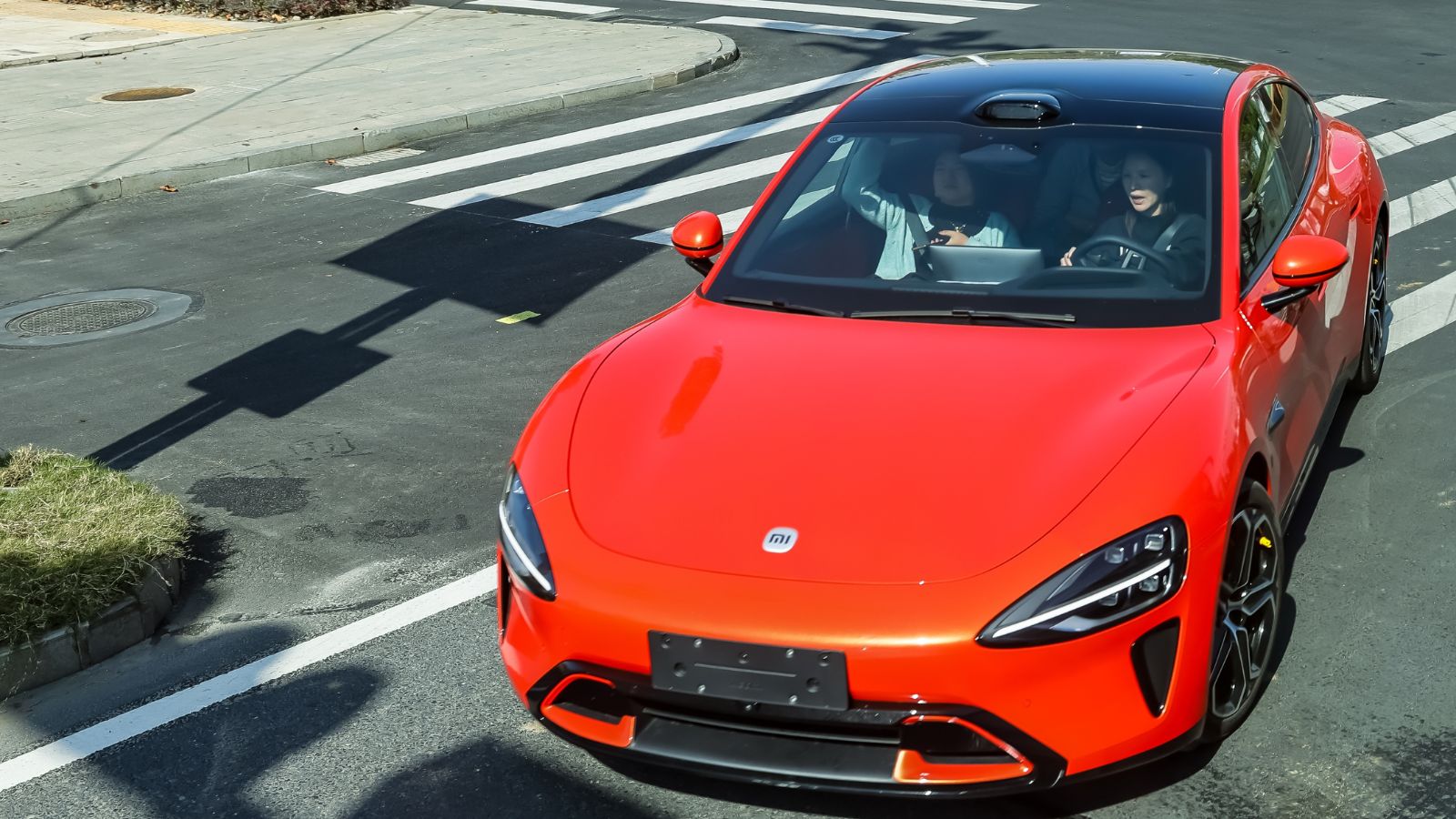
CHINESE EVS COULD CRUSH DETROIT, BUT AMERICAN DRIVERS MAY LOVE THEIR PRICES
Chinese EVs could put intense pressure on U.S. automakers if trade barriers are relaxed, investor Jason Calacanis warned. His comments followed Sen. Elissa Slotkin's claim that she had heard rumors President Donald Trump could allow Chinese vehicles into the U.S. as part of a broader China deal.
Trump has since called the claim a "total phony rumor," while saying Chinese automakers could build vehicles in the U.S. if they employ American workers. Chinese EVs still face major barriers, including a 100% Section 301 tariff and federal restrictions on certain China-linked vehicle technologies.
Calacanis sees a major threat to Detroit
Calacanis said opening the U.S. market to Chinese EVs could severely damage domestic automakers while creating an attractive option for buyers. He wrote on X that such a policy could mean the end of the U.S. automotive industry, even though consumers would likely be eager to buy the vehicles.
He pointed to the growing presence of low-cost Chinese EVs in Europe, Mexico, and the Middle East, including vehicles used by ride-hailing fleets. His argument centers on price competition as Chinese manufacturers expand internationally with competitively priced vehicles.
Chinese passenger vehicle exports rose 77.5% from a year earlier in August to 894,000 units. Exports of electric vehicles and plug-in hybrids increased 154.7%, while BYD's overseas shipments climbed 134.5% to 189,466 vehicles.
BYD became the world's largest seller of battery-electric vehicles in 2025. It sold 2.26 million EVs during the year, compared with Tesla's approximately 1.64 million vehicle deliveries.
Slotkin warns of jobs and security risks
Slotkin said she had heard rumors that Trump could allow Chinese cars to be sold in the United States as part of a broader agreement with Chinese President Xi Jinping. She called that possibility a strategic mistake and linked the issue to roughly 1.2 million Michigan jobs supported by the state's mobility industry.
The Michigan Democrat has also framed Chinese-connected vehicles as a national security concern. She has warned that such vehicles could collect sensitive information, including geolocation and infrastructure data, a concern that parallels federal restrictions on certain connected vehicle technologies linked to China.
Slotkin has argued that China's auto industry benefits from government subsidies that allow manufacturers to compete aggressively on price. She has cited those economic concerns alongside the potential security risks posed by connected vehicle systems.
Trump has since rejected Slotkin's claim, calling it a "total phony rumor" and saying he has kept Chinese vehicles out of the United States. He has separately said he would accept Chinese automakers building vehicles in the United States if they employ American workers.
Chinese EVs face several U.S. barriers
Chinese EVs face a 100% Section 301 tariff that took effect in 2024, up from the previous 25% rate. The tariff remains in place as part of the broader set of U.S. barriers to Chinese-made electric vehicles.
The Commerce Department has also restricted certain connected vehicles and related software and hardware linked to China. Restrictions covering certain connected vehicle manufacturers and software begin with model year 2027, while restrictions on covered vehicle connectivity system hardware generally begin with model year 2030.
Slotkin and Republican Sen. Bernie Moreno introduced the Connected Vehicle Security Act of 2026 to strengthen restrictions on foreign-adversary-linked vehicles and technology. The legislation sets a threshold of more than 15% ownership or control for manufacturers, developers, designers, or suppliers of connected vehicles, while covered software and vehicle connectivity system hardware use thresholds of more than 25%.
Together, the tariff and connected-vehicle restrictions create substantial barriers to Chinese passenger-vehicle brands entering the U.S. market.
Tesla and other automakers could face price pressure
A significant reduction in U.S. barriers could expose Tesla, Rivian, and traditional Detroit manufacturers to competitors with large production scale and lower-priced products. BYD already competes directly with Tesla in China and has rapidly expanded its international sales.
Chinese automakers are largely absent from U.S. showrooms, but their presence is growing elsewhere in North America. BYD has begun compliance procedures for two passenger vehicles in Canada and plans to open six dealerships in Canada.
Chinese brands have also gained a significant position in Mexico. They accounted for about 17% of new vehicle sales in Mexico during the first half of 2026 despite higher tariffs introduced during the year.
Trump said in September that he would be open to Chinese automakers building vehicles in the United States if they employ American workers. He also said he does not want Chinese automakers to build vehicles in Mexico and ship them into the United States.
Safety claims are not supported across the board
Calacanis also questioned the safety of Chinese EVs, but recent independent crash testing complicates a broad claim that Chinese electric vehicles are inherently unsafe. Several models from Chinese manufacturers have received the highest available ratings under European safety testing.
Euro NCAP awarded five-star ratings under its 2026 testing protocols to GAC's AION UT, Geely's E2, and the Leapmotor B05. Those results show that safety performance varies by vehicle and manufacturer.
The wider policy debate includes vehicle prices, manufacturing capacity, connected technology, trade protection, and national security. Safety concerns may apply to individual models, but they do not establish a broad safety problem across the Chinese EV market.
For now, U.S. consumers remain largely insulated from direct competition with Chinese passenger vehicle brands. With no announced change from the White House, existing tariffs and technology restrictions remain the central obstacles to those manufacturers entering the American market.
TL;DR
- Jason Calacanis says allowing Chinese EVs into the U.S. could severely damage domestic automakers, even as their lower prices make them attractive to consumers.
- Sen. Elissa Slotkin said she had heard rumors that Trump could loosen restrictions on Chinese cars, but Trump has since called the claim a "total phony rumor."
- Chinese EVs face steep U.S. tariffs and federal restrictions covering certain China-linked connected vehicles, software, and hardware.
- BYD sold 2.26 million battery-electric vehicles in 2025, ahead of Tesla's approximately 1.64 million vehicle deliveries.
- Euro NCAP awarded five-star ratings in 2026 to the AION UT, Geely E2, and Leapmotor B05, complicating broad claims that Chinese EVs are inherently unsafe.
If you liked this, you might also like:
- Judge blocks EPA move targeting California clean car waivers
- California Legislature approves Leno’s Law for phased classic vehicle smog exemptions
- Bessent keeps predicting cheaper oil, but drivers are still waiting for the lower prices to reach the pump
This article was made with AI assistance and human editing.
2026-09-13T13:53:08Z